
Thiel Calls the First American Pope a Communist Agent for Wanting AI Rules
Strip out the Aspen theater and the accusation rests on one hidden assumption that does not survive contact with the facts.
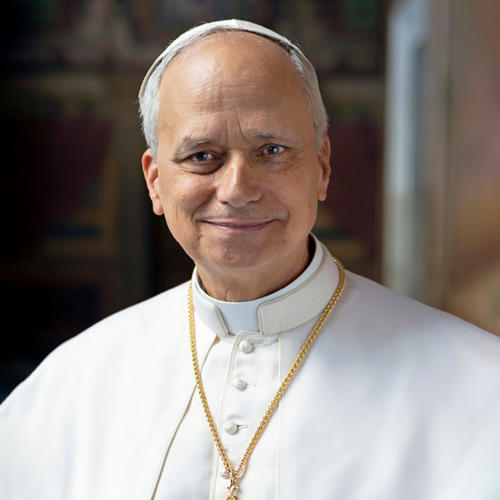
At the Aspen Ideas Festival in late June 2026, on a nonrecorded panel with Francis Fukuyama titled "Humanity at the End of History," Peter Thiel said Pope Leo XIV was, inadvertently, serving as a "Chinese communist agent." His reasoning, as journalists in the room recorded it, ran like this: the pope's call to regulate artificial intelligence might sway some Americans, but nobody in China is going to slow down because of an encyclical, so the effect is to brake only one runner in the US-China AI race. Slow one side, help the other. Therefore, in Thiel's words, Leo is "working for the Chinese Communists." The audience laughed. The Vatican declined to comment.
Because there was no recording, everything rests on reporters' notes, which is worth keeping in mind before anyone treats the exact phrasing as scripture. The word Thiel used was "inadvertently." Headlines flattened that into "pope is a Chinese agent," which is not the same claim and does him no favors either way.
Strip out the theater and you find a rule that should worry anyone who wants a real argument about AI. The rule is that any restraint proposed by anyone, a bishop or a senator or a safety researcher, becomes a subsidy to Beijing by definition. It is unfalsifiable. It converts every governance proposal into treason before the proposal is even read. That is not a rebuttal to the encyclical. It is a way of never having to hold one.
The premise is also just weak on the facts. Thiel's whole chain assumes China would ignore the pope while Americans obediently comply, and that China itself favors an unregulated free-for-all. China has its own AI rules, its own licensing regimes, its own content controls. Leo's encyclical did not ask the United States to disarm unilaterally. It called for international regulation. Thiel's version quietly rewrites a plea for shared rules into a plea for American self-sabotage, then attacks the thing he rewrote.
The document he was swinging at is not a tweet. Pope Leo XIV's first encyclical, Magnifica Humanitas, subtitled "On Safeguarding the Human Person in the Time of Artificial Intelligence," runs to 245 paragraphs and roughly 45,000 words, about three times the length of Leo XIII's Rerum Novarum. He signed it on 15 May 2026, the 135th anniversary of that earlier text, and it was published ten days later. Its argument is that AI "must be disarmed," and its central image is a choice between building a new Tower of Babel or building a city where God and humanity dwell together. What the encyclical actually spends its pages on is concrete and material: profit-driven job destruction, the use of AI to construct distorted narratives, and the concentration of the technology in the hands of a powerful few.
Notice that those are the parts nobody in Aspen laughed about, and they happen to be the parts that touch Thiel directly. He owns a large slice of the machinery being described. When the man who profits from concentration calls the man warning about concentration a foreign agent, the incentive is not hidden. It is the entire story.
There is an irony the framing works hard to bury. Leo XIV was elected on 8 May 2025, the first American pope in history, born Robert Prevost in Chicago in 1955, a missionary in Peru, head of the Augustinian order for twelve years. Thiel, an American who bankrolled the current administration and helped launch JD Vance, is calling the first American pope a communist asset. CNN reported that during an earlier project Thiel had privately worried that Vance might grow "too close to the pope." This is not a stray insult. It is a campaign.
The earlier project is the connective tissue. In March 2026 Thiel gave an invitation-only lecture series on the Antichrist in Rome, blocks from the Holy See, organized with the Cluny Institute and the Vincenzo Gioberti Cultural Association. Reporting says the lectures unsettled the Vatican and pushed two Catholic universities to state publicly that they had nothing to do with hosting them. Thiel's thesis is that the Antichrist need not be a person. It could be a world government that seizes power by promising to protect humanity from existential threats like AI or climate change. Once you hold that view, a papal call to regulate AI in the name of protecting people is not a moral argument to weigh. It is the very danger foretold. Father Paolo Benanti, the pope's AI adviser, described Thiel as operating as a "political theologian" inside Silicon Valley, which is about the most precise label anyone has offered.
So the two men are not really arguing about export controls or benchmarks. One says the deepest threat is a power that centralizes control while claiming to save us. The other says the deepest threat is exactly the kind of unaccountable, concentrated technical power the encyclical names. Both are describing a world government of sorts. They just disagree about whose hands it ends up in, and Thiel's hands are already on a good deal of it.
I have no need for the church to arbitrate the future of computing, and I would not hand it that job. What strikes me is that the encyclical asked ordinary, answerable questions about jobs, narrative manipulation, and who owns the machines, and one of the largest owners of those machines chose to answer by declaring the questioner a foreign agent to a room that found it funny. That kind of response tells you less about the pope's loyalties than about how little Thiel wants the underlying questions raised at all, which is the part I keep turning over.